Your cart is currently empty!
+86 15863276370

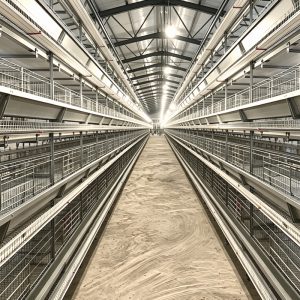
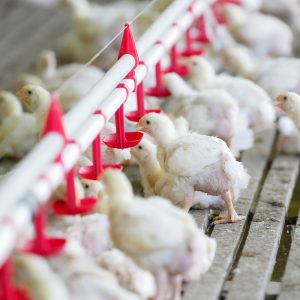
A poultry farm is not simply a building filled with equipment. Feeding, drinking, ventilation, manure management, cleaning, and biosecurity all influence the overall production environment.
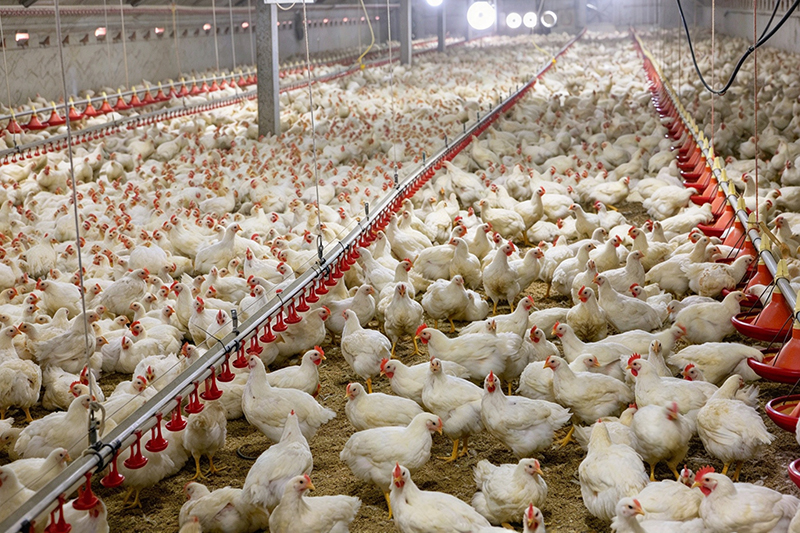
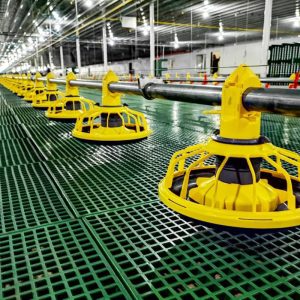
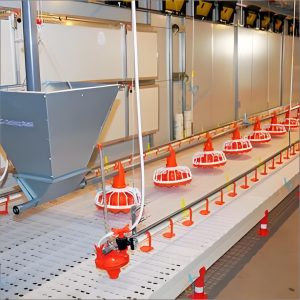
An integrated floor housing solution combines the main equipment required for floor-raised poultry with supporting hygiene and biosecurity measures. Depending on the farm design, this may include feeding systems, drinking lines, ventilation equipment, lighting, heating or cooling systems, manure-handling equipment, disinfection equipment, and controlled entry facilities.
Combining these components during the planning stage can improve system compatibility. For example, ventilation design should consider stocking density and house layout, while equipment placement should allow practical cleaning and maintenance. Biosecurity equipment should also be positioned according to the movement of workers, vehicles, equipment, and poultry.
A packaged solution can provide an additional project-management advantage. Instead of coordinating multiple equipment specifications separately, farm owners can review the system as a whole and ensure that major components are designed to work together.
However, “one package” does not mean that every farm should use the same configuration. Farm capacity, climate, production type, building structure, labor availability, local regulations, and biosecurity procedures should all be considered before equipment is selected.
For commercial poultry projects, an integrated approach can therefore help reduce coordination problems and create a more organized equipment plan. The objective is not simply to sell more equipment, but to connect housing, environmental control, daily operations, and biosecurity into a practical farm-management system.
Share this:
Other Posts
-
Automatic Feeding System: The “Nutrition Steward” for Broiler Farming
In large-scale broiler farming, scientific feeding is core to determining growth rate and feed conversion. Our independently developed automatic feeding system is designed for precise nutritional management. The system consists of a feed bin, conveying pipes, a drive motor, feed pans, and an intelligent controller, achieving fully automated feeding. Its advantages are significant: We provide…
-
Heat Stress Management in Tropical and Subtropical Poultry Farms: Cooling Strategies, Feeding Adjustment, and Stocking Density Optimization
Heat stress is a major challenge for poultry production in tropical and subtropical regions, especially during periods of abnormal temperature increases. This article analyzes the effects of heat stress on broiler feed intake, growth performance, and farm management efficiency. It discusses practical strategies including evaporative cooling systems, ventilation improvement, stocking density adjustment, and feeding schedule…
-
Poultry Farm Automation Trends: Why More Commercial Farms Are Adopting Automated Farming Systems
Poultry farm automation is becoming increasingly relevant as commercial farms seek greater efficiency, consistency, and better resource management. Automated feeding, drinking, ventilation, manure removal, and climate-control systems can reduce repetitive manual work and support more standardized daily operations. However, automation decisions should be based on farm scale, housing design, climate, production objectives, energy use, and…
-
Is Automation Upgrade Worth It? An ROI Analysis Model and Calculation Case for a 10,000-Bird Broiler Farm
This study builds an ROI model to evaluate automation upgrades for a 10,000-bird floor rearing farm. The model compares total investment (equipment + installation) against annual savings from labor, feed, medication, and mortality reduction. Key inputs: automated feeding system cost – 12,000;manuallaborcost–12,000;manuallaborcost–15/hour; feed waste reduction – 7%; mortality decrease – 2%; medication saving – 20%. Calculation:…
Product Categories
Subscribe To Product News
Leave your email address and receive our latest product updates