Your cart is currently empty!
+86 15863276370

Choosing a suitable nest box system for a breeder farm involves more than comparing purchase prices. Nest design can affect how hens access nesting areas, how eggs are collected, and how efficiently the house can be maintained.
Group nest boxes provide a shared nesting area for multiple hens. Depending on the design, they can make efficient use of floor space and work well with centralized egg collection systems. Their performance depends on sufficient nesting capacity, appropriate placement, suitable internal conditions, and regular cleaning. If access or capacity is inadequate, competition for nesting space may increase.
Individual nest boxes provide separate nesting compartments. This layout can help organize nesting spaces and make individual nest locations easier to identify. However, it may require more structural components and careful planning to provide sufficient access for the flock. Cleaning and egg collection arrangements also depend on the specific design.
For breeder farms, nest selection should consider bird numbers, male-to-female ratio, nesting capacity, house dimensions, egg collection method, hygiene requirements, and labor availability. Nesting behavior and floor eggs should also be monitored after installation, because equipment alone cannot guarantee that hens will use the intended nesting areas.
There is no universally superior option for every breeder flock. A well-designed group system may suit one house, while individual compartments may be more appropriate for another. The best choice is the system that matches the farm’s production plan, supports practical daily management, and allows reliable egg handling and cleaning.
Before purchasing, compare the complete layout and operating requirements—not just the price per nest.
Share this:
Other Posts
-
Impact of El Niño on Poultry Immunity and Vaccination Programs in Temperate and Tropical Regions
El Niño events cause abnormal temperature and humidity fluctuations, which directly affect poultry immune responses. In tropical zones, prolonged heat and humidity can suppress vaccine efficacy by increasing stress hormone levels and reducing antibody production. In temperate regions, sudden warming or unseasonable cold may disrupt the stability of vaccine storage and administration, leading to uneven…
-
Annual Feed Savings Estimation for a 10,000-Bird Broiler Farm Using Precision Feeding
Precision feeding delivers exact feed amounts based on real-time bird weight and intake patterns, minimizing waste. For a 10,000-bird flock with a 40-day cycle and average feed conversion ratio (FCR) of 1.6, total feed consumption reaches roughly 16,000 kg per cycle. Manual feeding typically wastes 5–10% of feed due to spillage, spoilage, and uneven distribution.…
-
5 Common Mistakes to Avoid When Purchasing Complete Poultry Automation Equipment: A Practical Buying Guide
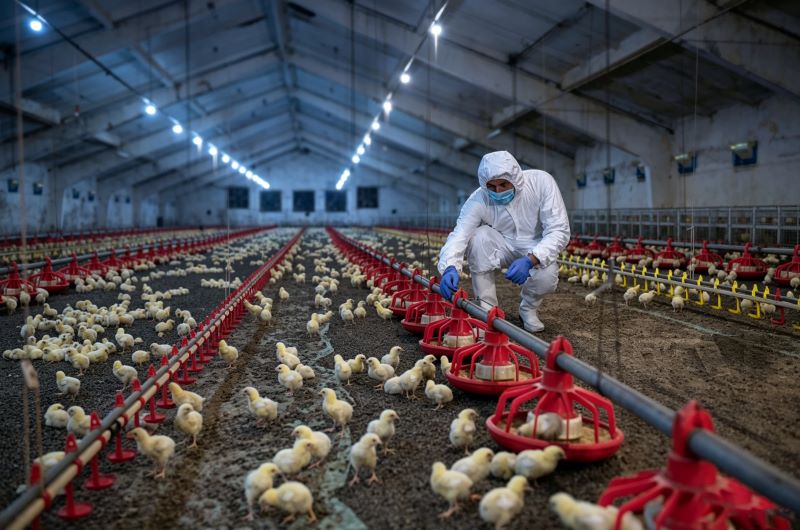
The selection of complete poultry automation equipment plays a critical role in improving farm efficiency and production stability. However, improper equipment planning, insufficient compatibility analysis, and lack of technical support may increase operational challenges. This article identifies five common mistakes in poultry automation equipment purchasing, including price-focused decisions, unsuitable system matching, climate adaptation issues, insufficient…
-
Equipment-as-a-Service: Feasibility and Market Acceptance in Automated Poultry Farming
Equipment-as-a-Service (EaaS) is emerging as an innovative procurement model in the livestock industry, particularly in automated poultry farming. Instead of large upfront investments, farmers can access advanced equipment such as feeding systems, ventilation units, and water supply systems through subscription-based or pay-per-use models. This approach significantly reduces financial pressure and allows small and medium-sized farms…
Product Categories
Subscribe To Product News
Leave your email address and receive our latest product updates