Your cart is currently empty!
+86 15863276370

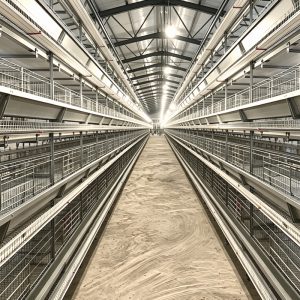
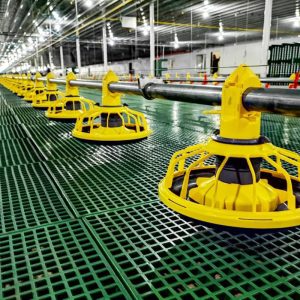
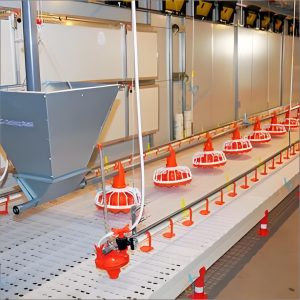
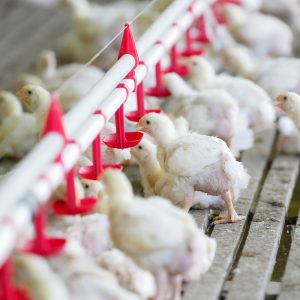
For a 10,000-broiler farm, automation may include automatic feeding and drinking systems, ventilation equipment, environmental controllers, and manure-handling solutions. These systems can simplify routine operations, but their economic benefits should be assessed over the equipment’s expected service life.
The evaluation begins with the initial investment, including equipment, installation, electrical work, and any necessary building modifications. Annual operating costs should then cover electricity, maintenance, replacement parts, and additional labor required for inspection and servicing.
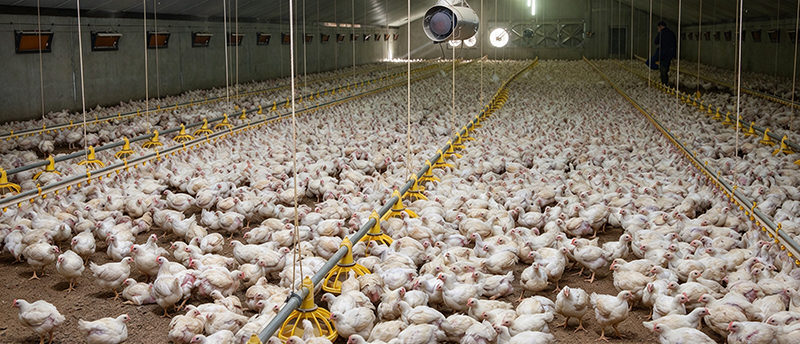
Potential benefits may include reduced manual feeding time, more consistent feed distribution, improved environmental monitoring, and more efficient daily management. These benefits should be measured using actual operating records. Feed savings or changes in mortality should not be assumed without reliable farm data.
A practical model is:
Annual Net Benefit = Verified Operating Savings − Additional Annual Costs
Life-Cycle Net Value = Total Net Benefits Over the Evaluation Period − Initial Investment
Farm owners can also estimate the payback period when annual net benefits are positive. The analysis should consider flock cycles, equipment lifespan, local energy and labor prices, financing costs where relevant, and the time value of money.
For a fair comparison, evaluate manual, partially automated, and fully automated configurations under the same production assumptions. Sensitivity analysis can show how results change when feed prices, labor costs, or maintenance expenses fluctuate.
For commercial broiler producers, automation is worthwhile when measurable long-term benefits justify the total cost and operational requirements. A structured life-cycle analysis provides a more reliable basis for investment decisions than a fixed return-on-investment promise.
Share this:
Other Posts
-
Energy Consumption and Carbon Footprint Changes in Poultry Farms across Climatic Zones during El Niño Years
El Niño events alter temperature and humidity patterns, affecting energy use in poultry houses. In temperate zones, unexpected cold spells increase heating demand, raising carbon emissions. Subtropical farms face longer hot periods, intensifying ventilation and cooling pad operation, which spikes electricity consumption. Tropical regions experience extreme humidity, forcing fans and dehumidifiers to run longer. These…
-
Poultry Farm Automation Trends: Why More Commercial Farms Are Adopting Automated Farming Systems
Poultry farm automation is becoming increasingly relevant as commercial farms seek greater efficiency, consistency, and better resource management. Automated feeding, drinking, ventilation, manure removal, and climate-control systems can reduce repetitive manual work and support more standardized daily operations. However, automation decisions should be based on farm scale, housing design, climate, production objectives, energy use, and…
-
Empirical Estimation of 50% Labor Cost Reduction: A Cost-Saving Model for Automated Feeding in a 10,000-Bird Broiler Farm
This study quantifies labor cost savings from switching to automated feeding in a 10,000-bird broiler farm. Manual feeding requires two full-time workers for feed bag handling, transport, and daily distribution. Annual labor costs include wages (15/hour×8h/day×365days×2workers=15/hour×8h/day×365days×2workers=87,600), plus benefits, recruitment, and training overhead (estimated 25% of wages, 21,900)andmanagementsupervision(21,900)andmanagementsupervision(5,000). Total manual feeding cost: $114,500. Automated feeding uses a…
-
Precision Feeding Delivers 0.05 FCR Improvement – Saves 7.5 Tons of Feed per 10,000 Broilers
What if reducing your feed conversion ratio (FCR) by just 0.05 could save thousands of dollars every year? Our latest field data confirms that automated precision feeding systems consistently achieve this gain – with no extra labor or complex management. Here’s the math for a standard 10,000‑bird house: At today’s feed price of $450/ton, that’s…
Product Categories
Subscribe To Product News
Leave your email address and receive our latest product updates