Your cart is currently empty!
+86 15863276370

1. Understanding the True Cost of Labor
Foreign workers are part of the workforce in many Middle Eastern industries, but labor costs vary considerably by country and job. An hourly rate of US$8–12 can be used as an illustrative assumption for financial modeling, not as a regional wage benchmark. Employers should also consider recruitment, accommodation, transportation, overtime, training, and staff turnover where applicable.
Labor availability is another consideration. Recruitment delays, employee turnover, and the need for consistent daily routines can affect farm operations. However, these risks differ between locations and employers.
2. Comparing Manual and Automated Poultry Systems
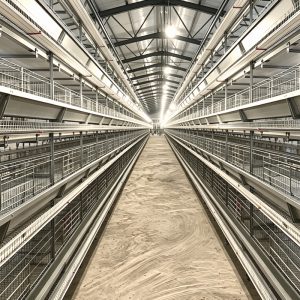
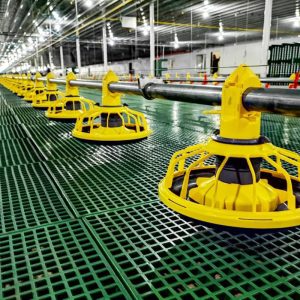
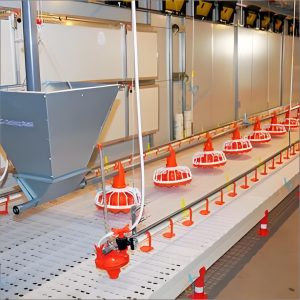
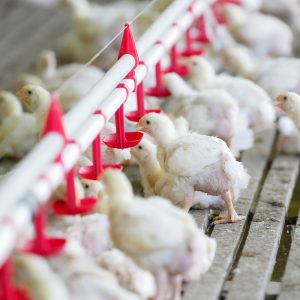
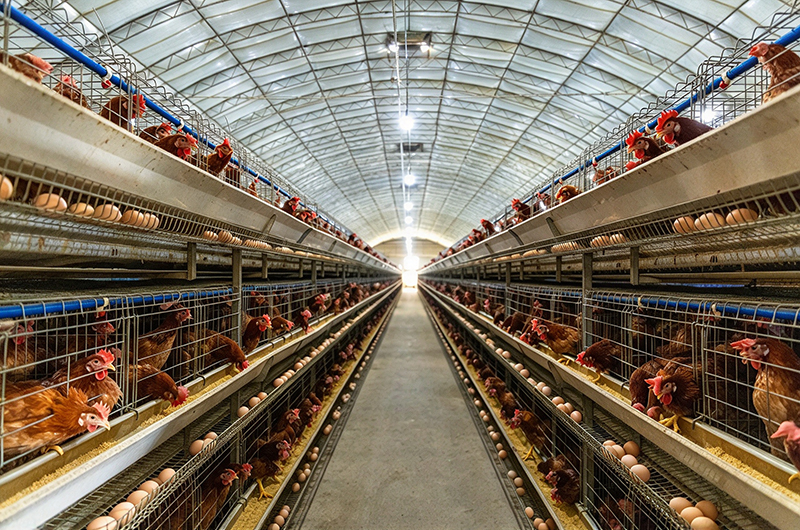
Automatic feeding lines can reduce the need for repeated manual feed distribution. Nipple drinking systems support organized water delivery, while manure belts and automatic removal equipment can reduce routine cleaning work in suitable housing systems.
Automation does not eliminate labor requirements. Farms still need workers to inspect equipment, monitor bird behavior, maintain hygiene, and respond to system faults. Equipment selection should therefore focus on reducing repetitive tasks while maintaining effective flock management.
3. How to Estimate the Payback Period
A practical calculation compares the initial automation investment with annual net operating savings.
Annual net savings = labor costs avoided + other verified savings − additional operating and maintenance costs.
The simple payback period is calculated by dividing the initial investment by annual net savings, provided that net savings are positive. For example, the calculation should use the actual number of labor hours reduced, the fully loaded labor cost, energy consumption, maintenance expenses, and equipment service life.
Share this:
Other Posts
-
Sensor and Timer-Driven Precision Feeding: How Automated Systems Control Feed Waste
Traditional feeding often creates a dilemma: underfeeding some birds while overfeeding others. Automated feeding systems solve this through sensor and timer integration. Sensors monitor feed levels in pans and detect bird activity patterns. When combined with timers programmed for specific feeding schedules, the system delivers precise portions at optimal times. This ensures feed is always…
-
Deconstructing the Payback Period of Automated Feeding Systems: A Quantitative Analysis of Feed Savings Contribution
Automated feeding systems significantly shorten payback periods by reducing feed waste. This study quantifies how much feed savings contribute to overall return on investment in a 10,000‑bird broiler house. A typical automated feeding system costs $12,000–$15,000 installed. Annual savings come from three sources: labor (70% reduction, saving ~$10,000), feed waste reduction (5–10% saving, ~$2,700–$5,400), and…
-
Global Broiler Farming Equipment Market by Region: Key Trends Across Asia-Pacific, North America and Europe
The global broiler farming equipment market varies significantly by region. Differences in farm scale, climate, labor costs, production systems, and investment levels influence the demand for feeding, drinking, ventilation, climate control, and manure management equipment. Understanding these regional characteristics can help poultry producers select equipment based on actual farm requirements.
-
Saudi Vision 2030 and Broiler Farm Investment: Key Equipment Needs for Poultry Floor Farming
Saudi Arabia’s Vision 2030 places emphasis on food security, agricultural development, and private-sector participation. These priorities have supported initiatives to strengthen the domestic poultry industry. For investors planning commercial broiler farms, selecting suitable poultry floor farming equipment is an important part of project design. Equipment decisions should reflect farm capacity, local climate, operating costs, and…
Product Categories
Subscribe To Product News
Leave your email address and receive our latest product updates