Your cart is currently empty!
+86 15863276370

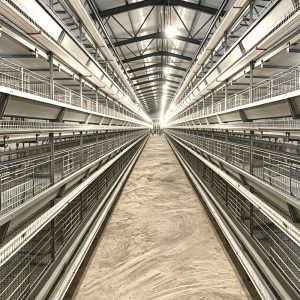
As a professional manufacturer of broiler breeding equipment, we are committed to providing advanced layer-stacked broiler cage systems for farmers. Our products are made of high-quality hot-dip galvanized steel with a service life of over 15 years, featuring corrosion resistance and anti-aging properties to ensure long-term stable operation.
Core Advantages:
- •High-density farming: Layer-stacked design increases stocking density by more than 3 times compared to floor rearing, significantly saving land resources
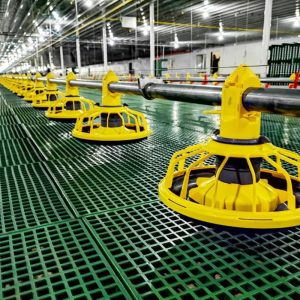
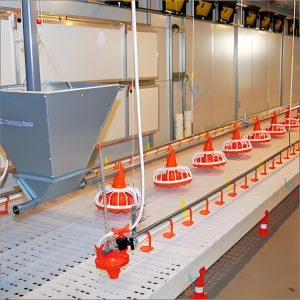
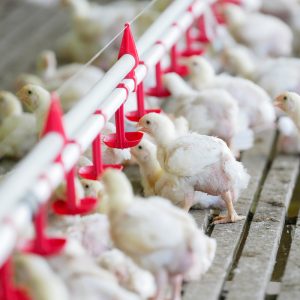
- •Automated management: Equipped with automatic feeding, drinking, and manure removal systems, reducing labor costs by 80%, one person can manage 20,000-30,000 chickens
- •Excellent disease prevention: Complete separation of chickens from feces effectively prevents disease transmission, survival rate increases to 98%
- •Energy-efficient and high-yield: Reduced activity of broilers improves feed conversion rate, feed-to-meat ratio decreases by 0.20, saving 0.7 yuan per chicken
Our equipment adopts a frame structure with push-pull cage doors for convenient operation and easy chicken handling. The manure removal system uses PP material conveyor belts to achieve “manure-free floor,” maintaining a clean chicken house environment. We welcome new and existing customers to visit and inspect, and we will provide comprehensive technical support and after-sales service to jointly create new brilliance in farming!
Share this:
Other Posts
-
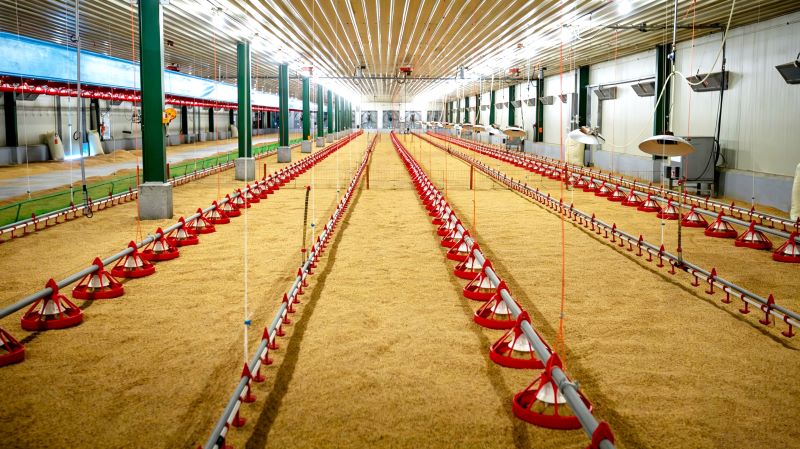
Poultry House Orientation and Heat Stress Reduction: East–West vs North–South Layout Impact on Solar Heat Gain
Poultry house orientation is a fundamental design parameter that directly affects thermal comfort, ventilation efficiency, and broiler performance. In commercial poultry production systems, improper building orientation can significantly increase solar heat gain and raise the risk of heat stress, especially in hot climate regions. An east–west oriented poultry house is typically more exposed to direct…
-
2026–2030 Adoption Forecast for Floor Rearing Automation: Which Technology Becomes Standard First?
Over the next five years, three automation technologies will lead floor rearing adoption. Automated feeding systems top the list. Their clear payback (12–24 months) and direct feed savings (5–10%) make them the first standard feature globally. Tunnel ventilation with evaporative cooling follows closely. Rising heat waves and climate volatility push this system from optional to essential in tropical…
-
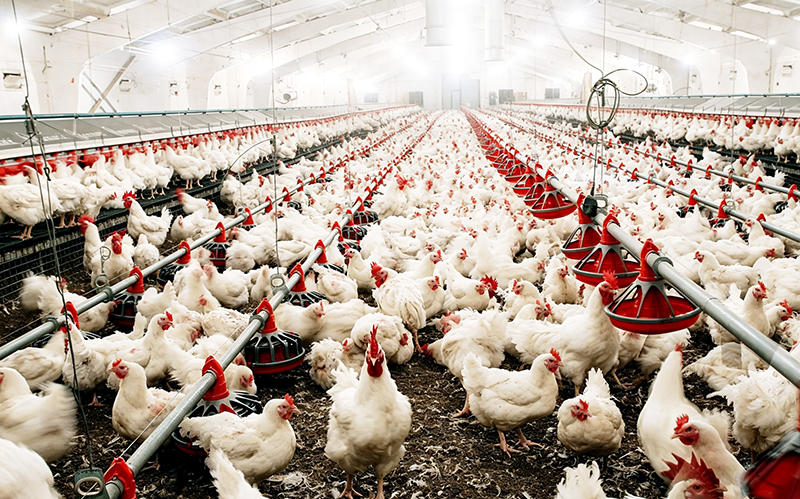
Flock Uniformity and Group Management in Poultry Farms: Improving Heat Distribution and Environmental Control
Flock uniformity is an important factor in poultry house management. Significant differences in body weight can create uneven feeding requirements and differences in individual heat production. Grouping birds by size or production stage can help farmers manage these variations and improve environmental control, although the actual effect depends on flock density, climate, ventilation, and management…
-
Intelligent Broiler Farming Equipment: Setting a New Benchmark for Efficient Farming
With the scaling development of the poultry industry, modern broiler farming equipment has become key to improving profitability. We specialize in the R&D and production of a series of farming equipment, helping farmers achieve efficient, labor-saving, and scientific feeding management. Core equipment includes: Our equipment is characterized by durability, ease of operation, and energy efficiency.…
Product Categories
Subscribe To Product News
Leave your email address and receive our latest product updates