Your cart is currently empty!
+86 15863276370

Feed waste represents a major economic loss in broiler production. Three primary sources account for most waste: spillage, spoilage, and feed refusal.
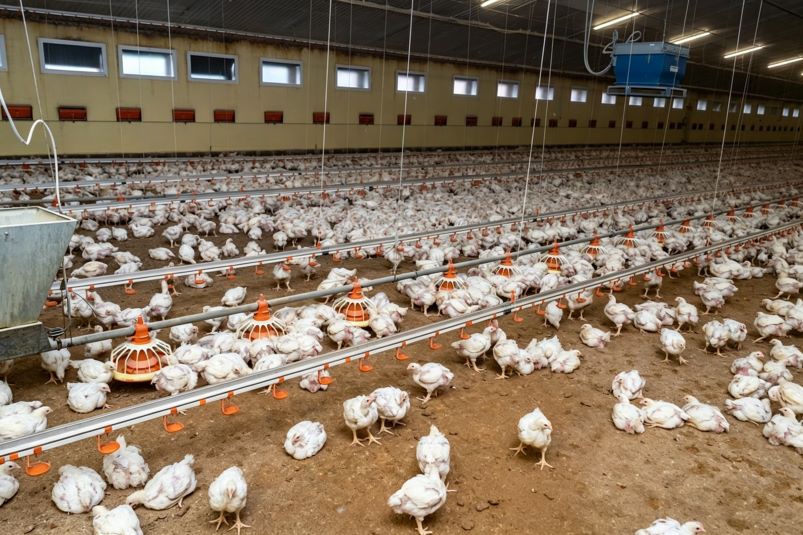
Spillage occurs during transport, loading, and at the feeder due to overfilling or bird activity. Typical losses range from 3–5% of total feed. Spoilage results from moisture in litter or humidity, causing mold and nutrient degradation, adding another 2–4% loss. Feed refusal happens when birds selectively eat or reject poor-quality pellets, wasting 1–3%.
In a 10,000-bird farm consuming 100 tons annually, total waste reaches 6–12 tons at 450/ton,costing2,700–5,400 per year. About half comes from spillage, one-third from spoilage, and the rest from refusal. Addressing each source with improved feeder design, dry litter management, and feed processing can recover 60–70% of this loss, directly improving profitability.
Share this:
Other Posts
-
Automatic Feeding System: The “Nutrition Steward” for Broiler Farming
In large-scale broiler farming, scientific feeding is core to determining growth rate and feed conversion. Our independently developed automatic feeding system is designed for precise nutritional management. The system consists of a feed bin, conveying pipes, a drive motor, feed pans, and an intelligent controller, achieving fully automated feeding. Its advantages are significant: We provide…
-
Nighttime Feeding and Light Regulation Strategies: Behavioral Intervention to Avoid High-Temperature Periods and Impacts on Growth Performance
High ambient temperatures suppress feed intake in broilers, reducing growth and feed efficiency. Nighttime feeding combined with adjusted light schedules offers an effective solution. By shifting feeding to cooler evening and early morning hours, birds consume more feed when heat stress is minimal. A light regimen of 4 hours light, 2 hours dark during nighttime…
-
Adjusting Vaccination Programs in Hot Seasons – Timing and Stress Control Strategies Backed by Field Data
High temperatures don’t just affect bird comfort – they also impact vaccine effectiveness. Heat stress elevates corticosterone levels, which can suppress immune responses. Vaccinating during peak heat may add extra stress, reducing antibody production and increasing disease risk. Our field study on 50,000 broilers compared two vaccination schedules: morning (8–10 AM, temperature <26°C) vs. midday…
-
Semi-Automatic vs. Fully Automatic Poultry Farming Systems: ROI Comparison and Investment Guide
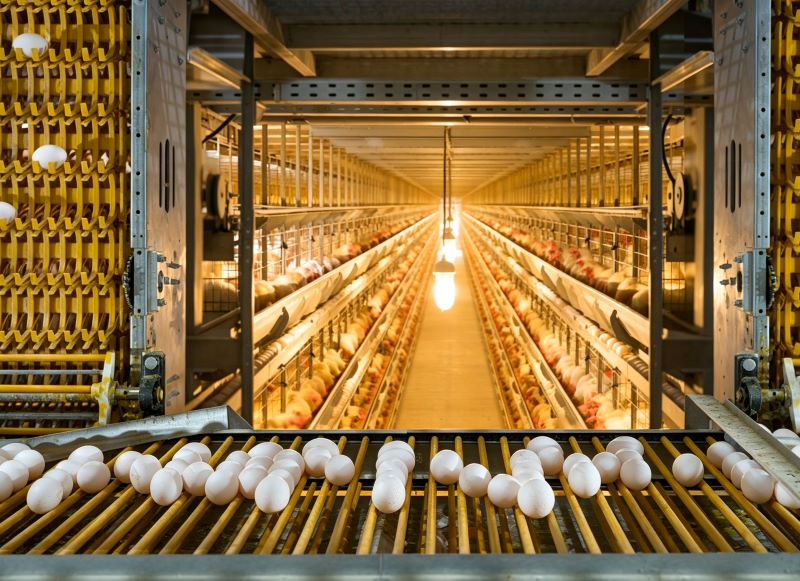
Choosing between a semi-automatic and fully automatic poultry farming system is an important investment decision. The right solution depends not only on equipment cost, but also on farm capacity, labor availability, management requirements, and long-term operating expenses.
Product Categories
Subscribe To Product News
Leave your email address and receive our latest product updates