Your cart is currently empty!
+86 15863276370

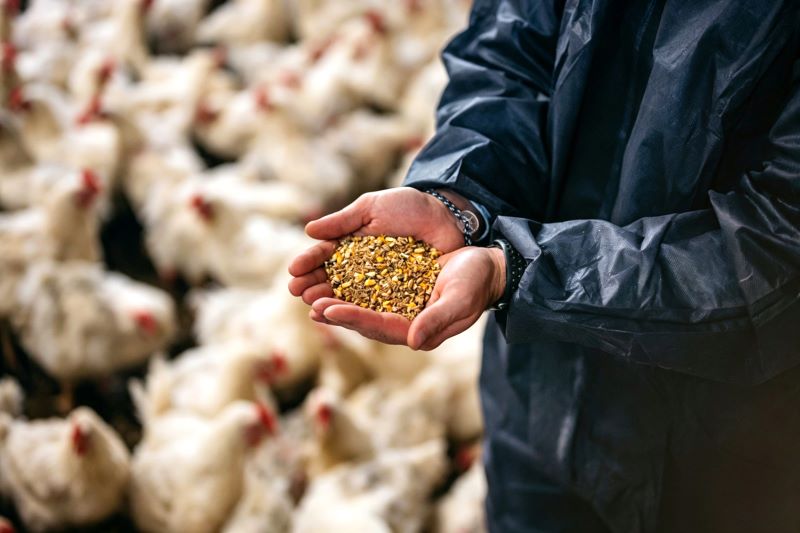
Feed constitutes 60–70% of total broiler production costs. Automated feeding systems reduce feed waste through precise portion control, creating a measurable input‑output economic model.
Input (Investment)
- Equipment: silo, auger/conveyor, pan feeders, sensors, controller
- 10,000‑bird house cost: $12,000–$15,000 (installed)
Output (Annual Savings from Feed Alone)
- Manual feeding waste: 8–10% of total feed
- Automated feeding waste: 2–3%
- Net feed saving: 5–7%
- Annual feed consumption (10,000 birds, 40‑day cycle, 6 cycles/year): ~96 tons
- Feed saving: 4.8–6.7 tons/year
- At $450/ton: $2,160–$3,015 saved annually from feed reduction
Extended Output (Additional Savings)
- Labor: ~$10,000/year
- Medication & mortality: ~$1,500/year
- Total annual saving: $13,660–$14,515
ROI Calculation
Payback period (feed savings only) = $13,500 ÷ $2,600 = 5.2 years
Payback (total savings) = $13,500 ÷ $14,000 ≈ 1 year (11.6 months)
The model shows that while feed savings alone justify automation over 5 years, combining labor and health benefits shortens payback dramatically. For farms with high feed prices or larger scale, payback drops below 10 months. Automated feeding is not just a cost‑cutting tool—it is a high‑return investment.
Share this:
Other Posts
-
Poultry Farm Automation Trends: Why More Commercial Farms Are Adopting Automated Farming Systems
Poultry farm automation is becoming increasingly relevant as commercial farms seek greater efficiency, consistency, and better resource management. Automated feeding, drinking, ventilation, manure removal, and climate-control systems can reduce repetitive manual work and support more standardized daily operations. However, automation decisions should be based on farm scale, housing design, climate, production objectives, energy use, and…
-
How to Choose Your Poultry System
How to Choose the Right Poultry Farming System and Equipment Selecting the right farming method and equipment starts with evaluating your farm scale, climate conditions, and target market. Floor rearing is suitable for welfare-focused farms, offering lower initial investment, easier all-in/all-out sanitation management, and relatively simple litter handling. Cage systems maximize stocking density but face…
-
Annual Feed Savings Estimation for a 10,000-Bird Broiler Farm Using Precision Feeding
Precision feeding delivers exact feed amounts based on real-time bird weight and intake patterns, minimizing waste. For a 10,000-bird flock with a 40-day cycle and average feed conversion ratio (FCR) of 1.6, total feed consumption reaches roughly 16,000 kg per cycle. Manual feeding typically wastes 5–10% of feed due to spillage, spoilage, and uneven distribution.…
-
Synergistic Optimization of Cooling Pad Expansion and Water Quality Management: Strategies for Improving Evaporative Cooling Efficiency in Hot and Humid Regions
In tunnel-ventilated poultry houses, evaporative cooling pad performance directly impacts bird welfare and productivity during summer. Two critical factors determine system effectiveness: proper pad sizing and water quality management. Pad Sizing Principles Pad area should be determined by total tunnel fan capacity, not house dimensions. Industry standard recommends one square foot of six-inch pad for…
Product Categories
Subscribe To Product News
Leave your email address and receive our latest product updates