Your cart is currently empty!
+86 15863276370

Proper sizing of evaporative cooling pads is a critical factor in maintaining effective environmental control in modern poultry houses. Instead of relying on building area alone, the cooling pad surface area should be calculated based on the total airflow capacity of tunnel ventilation fans.
In tunnel-ventilated poultry systems, air velocity through the cooling pad is a key design parameter. A commonly recommended design standard is approximately 350 feet per minute (ft/min) across the pad surface. This ensures sufficient air exchange while maintaining effective evaporative cooling performance.
When the cooling pad area is undersized, air velocity increases beyond the optimal range. This leads to higher static pressure inside the house, reduced fan efficiency, and a significant drop in overall airflow rate. As a result, the evaporative cooling effect becomes weaker, and indoor temperature control may be compromised, especially during hot weather conditions.
Conversely, properly matched cooling pad area helps maintain balanced system resistance, stable airflow, and efficient heat removal. The design should always be coordinated with total fan capacity, ensuring that air entering the house is evenly distributed and effectively cooled.
Therefore, the correct engineering approach is to size cooling pads based on total tunnel fan airflow (m³/h or CFM) rather than poultry house floor area. This system-based calculation improves thermal comfort, reduces heat stress in broilers, and enhances overall production efficiency.
In modern poultry engineering, integrating ventilation and cooling pad design is essential for achieving stable environmental control and optimal bird performance.
Share this:
Other Posts
-
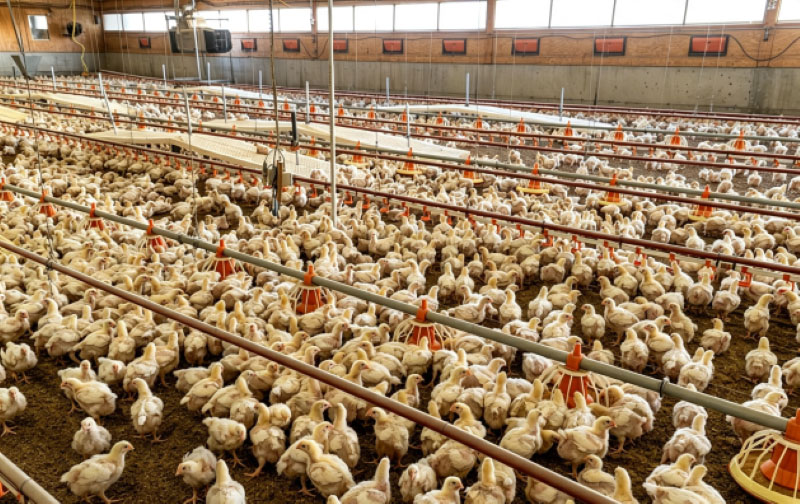
El Niño-Based Feed Storage Strategies for Poultry Farms: Preventing Mold Risk Through Climate-Adaptive Management
El Niño-related climate variations may create additional challenges for poultry feed storage, especially in humid regions where mold risk can increase. This article discusses climate-adaptive strategies including sealed feed silos, moisture control methods, and phased feed purchasing plans. By combining suitable storage equipment with scientific management practices, poultry farms can improve feed quality stability and…
-
Semi-Automatic vs. Fully Automatic Poultry Farming Systems: ROI Comparison and Investment Guide
Choosing between a semi-automatic and fully automatic poultry farming system is an important investment decision. The right solution depends not only on equipment cost, but also on farm capacity, labor availability, management requirements, and long-term operating expenses.
-
How to Improve Broiler Feed Conversion Ratio: The Synergy of Precision Feeding and Smart Environmental Control
Feed conversion ratio (FCR) is the most critical metric in broiler production—feed accounts for 60–70% of total costs. Improving FCR by just 0.1 can save over 6 tons of feed per 10,000 birds annually. This article examines how precision feeding and smart environmental control work together to achieve this gain. Precision Feeding: Right Amount, Right…
-
Equipment + Service” Model: The Next Growth Driver in Biosecurity Equipment Market
As disease outbreaks become more frequent, poultry farms are shifting from buying standalone biosecurity equipment to seeking integrated solutions. The “equipment + service” model is emerging as a key growth driver in this space. This model combines hardware—such as automated disinfection channels, air filtration systems, and smart access controls—with value-added services like biosecurity audits, sanitation…
Product Categories
Subscribe To Product News
Leave your email address and receive our latest product updates