Your cart is currently empty!
+86 15863276370

Poultry house orientation is a fundamental design parameter that directly affects thermal comfort, ventilation efficiency, and broiler performance. In commercial poultry production systems, improper building orientation can significantly increase solar heat gain and raise the risk of heat stress, especially in hot climate regions.
An east–west oriented poultry house is typically more exposed to direct solar radiation on its long sidewalls, particularly during afternoon hours when external temperatures are highest. This results in higher cumulative heat load inside the structure, increasing the demand on ventilation and cooling systems. Under field operation conditions, this layout can contribute to unstable internal temperatures and reduced environmental control efficiency if shading systems are not properly implemented.
In contrast, a north–south orientation distributes solar exposure more evenly throughout the day. This reduces prolonged heat accumulation on a single wall surface and helps maintain more stable internal thermal conditions. As a result, ventilation systems operate more efficiently, and overall temperature fluctuations inside the poultry house are reduced.
Quantitative field-based evaluations indicate that a properly designed north–south oriented poultry house, combined with shading and insulation measures, can reduce solar heat gain by approximately 15–30% compared to poorly protected east–west layouts. This improvement contributes to better feed intake stability, reduced heat stress incidence, and improved flock uniformity.
Additional design factors such as roof insulation, sidewall height, overhang structure, and fan placement further influence overall thermal performance. Therefore, poultry house orientation should be considered as part of an integrated environmental control system rather than a standalone design decision.
Share this:
Other Posts
-
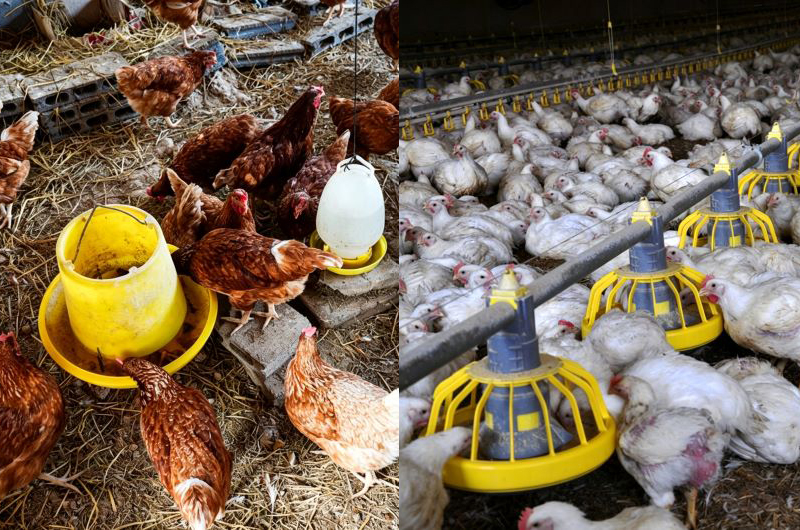
From Feed Waste to Precision Feeding: How Better Feed Management Can Improve Broiler FCR and ROI
Feed is one of the major operating costs in broiler production, making feed efficiency an important factor in farm profitability. Precision feeding and well-designed feeding equipment can help reduce unnecessary feed waste and improve feeding consistency. However, the return on investment depends on farm conditions and should be evaluated using actual production data.
-
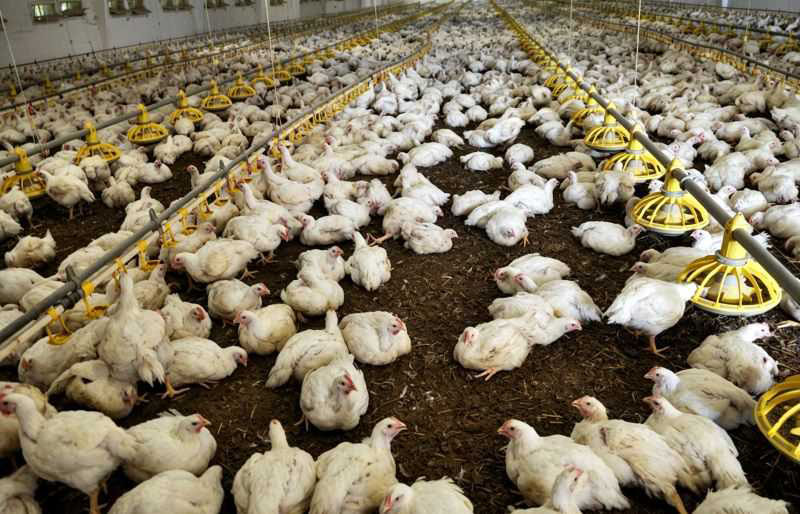
Poultry Farm Automation Trends: Why More Commercial Farms Are Adopting Automated Farming Systems
Poultry farm automation is becoming increasingly relevant as commercial farms seek greater efficiency, consistency, and better resource management. Automated feeding, drinking, ventilation, manure removal, and climate-control systems can reduce repetitive manual work and support more standardized daily operations. However, automation decisions should be based on farm scale, housing design, climate, production objectives, energy use, and…
-
All-In, All-Out, Complete Sanitization: Why Floor Rearing Systems Achieve Disease Elimination
Floor rearing systems offer a distinct advantage in disease control through the all-in, all-out management model. Unlike cage systems where birds remain in place across cycles, floor houses allow complete depopulation between flocks. This empty period enables thorough cleaning of every surface—walls, floors, feeders, and drinkers. Without cages obstructing access, disinfectants reach all areas, eliminating…
-
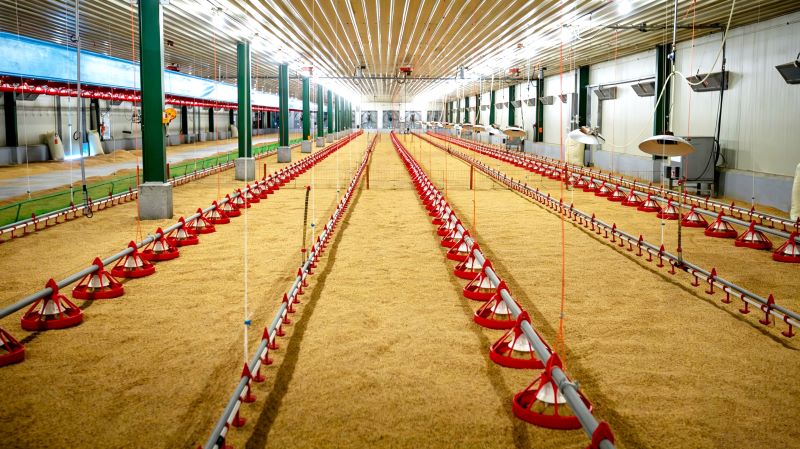
Poultry House Orientation and Heat Stress Reduction: East–West vs North–South Layout Impact on Solar Heat Gain
Poultry house orientation is a fundamental design parameter that directly affects thermal comfort, ventilation efficiency, and broiler performance. In commercial poultry production systems, improper building orientation can significantly increase solar heat gain and raise the risk of heat stress, especially in hot climate regions. An east–west oriented poultry house is typically more exposed to direct…
Product Categories
Subscribe To Product News
Leave your email address and receive our latest product updates