Your cart is currently empty!
+86 15863276370

During extreme heat, the sequence in which poultry cooling equipment operates can affect both cooling performance and energy use. A staged control strategy is generally more effective than turning every device on at the same time.
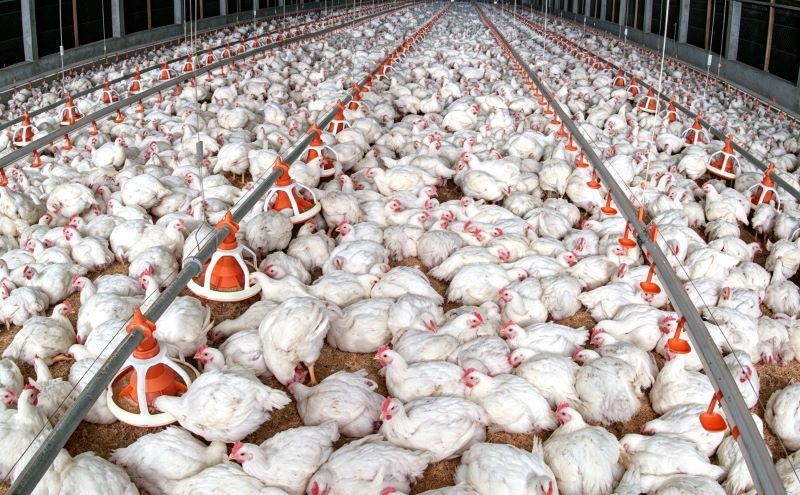
Stage 1: Increase ventilation.
When indoor temperature begins to rise, tunnel or longitudinal ventilation should be increased first. Exhaust fans remove hot air and improve air movement around the birds. Fan capacity should be adjusted according to house temperature, stocking density, and required airflow.
Stage 2: Evaluate evaporative cooling conditions.
When ventilation alone cannot maintain the target indoor environment, evaporative cooling pads can be activated. Their effectiveness depends strongly on outdoor relative humidity and airflow. In humid weather, excessive water use may provide limited additional cooling, so humidity and temperature should be monitored together.
Stage 3: Apply multi-stage cooling.
During extreme heat, additional tunnel fans and cooling pads can operate through staged control. Temperature sensors and environmental controllers can automatically adjust fan speed, cooling stages, and operating intervals according to changing conditions.
The key principle is simple: establish sufficient airflow before relying on evaporative cooling. The exact temperature and humidity thresholds should be determined according to local climate, house design, bird age, ventilation capacity, and equipment specifications.
Share this:
Other Posts
-
Indonesia, Vietnam, the Philippines: Opportunities and Entry Strategies for Floor Rearing Equipment in Southeast Asia’s Three Key Markets
Southeast Asia’s poultry sector is shifting from backyard farming to commercial production, creating strong demand for floor rearing equipment. Indonesia, Vietnam, and the Philippines represent the region’s most promising markets. Indonesia has the largest broiler population but faces fragmentation. Success requires affordable semi‑automated systems and local after‑sales support. Vietnam’s market is more structured, with growing…
-
What’s the Payback Gap? An Empirical ROI Comparison of Semi‑Automated vs. Fully Automated Floor Rearing Equipment
This study compares payback periods for semi‑automated (auto feeders only) and fully automated (feeders + ventilation + manure removal) floor rearing systems in a 10,000‑bird house. Semi‑automated equipment costs $8,000–$10,000, saving 70% of feeding labor and 5% of feed waste. Fully automated systems cost $25,000–$30,000 but eliminate 90% of labor and reduce feed waste by…
-
EU’s 2027 Cage Ban: How Long Will the Policy-Driven Boom for Floor Rearing Equipment Last?
The EU will ban conventional cages for laying hens and broilers by 2027. This regulation forces farms to switch to cage‑free systems, primarily floor rearing and aviaries. Consequently, demand for floor rearing equipment—feeders, drinkers, litter management, and ventilation—has surged. Market analysts estimate that the transition affects over 300 million hens in Europe alone. Replacement cycle…
-
Optimizing Maintenance and Spare Parts Inventory: Preventive Strategies to Reduce Environmental Control System Failures
Environmental control systems are critical for poultry house performance. Unplanned fan or sensor failures during heat waves can cause catastrophic losses. A preventive maintenance strategy significantly reduces this risk. Key elements include: scheduled inspections of fans, motors, and belts every 500 operating hours; calibration checks for temperature and humidity sensors monthly; and cleaning of cooling…
Product Categories
Subscribe To Product News
Leave your email address and receive our latest product updates