Your cart is currently empty!
+86 15863276370

Effective poultry house cooling requires more than a single piece of equipment. An integrated system can combine exhaust fans, evaporative cooling pads, fogging equipment, temperature and humidity sensors, and an environmental controller to respond to changing climate conditions.
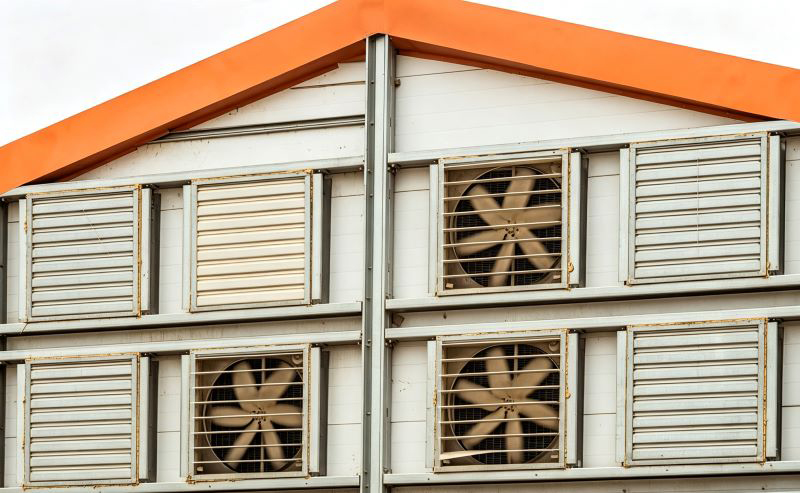
The first step is to establish sufficient airflow. Fans remove hot air and improve air movement inside the house. Cooling pads can then reduce incoming air temperature through evaporative cooling. Fogging systems may provide additional cooling when environmental conditions are suitable, but their effectiveness depends strongly on humidity and ventilation capacity.
System configuration should also match the local climate. In dry and hot regions, evaporative cooling can be particularly useful because lower humidity generally provides greater evaporation potential. In hot and humid climates, excessive water application may provide limited additional cooling, making ventilation capacity and humidity control more important.
Smart controllers can integrate sensor data and automatically adjust fan stages, cooling pads, and fogging according to preset operating conditions. This reduces reliance on fixed schedules and allows the system to respond more dynamically to temperature changes.
From an investment perspective, ROI should consider equipment cost, electricity and water consumption, maintenance, labor requirements, production objectives, and local climate. A higher initial investment may be reasonable when the system provides better environmental control and operational efficiency over its service life.
The most effective cooling solution is therefore not necessarily the system with the most equipment, but the one correctly matched to the poultry house, climate, and production requirements.
Share this:
Other Posts
-

Automatic Manure Removal System ROI Analysis: Labor Cost, Ammonia Control, and Waste Management Comparison Before and After Installation
Automatic manure removal systems are becoming an important component of modern poultry farm automation. This article compares traditional manual manure handling and automated manure conveyor systems from three perspectives: labor requirements, ammonia management, and waste processing efficiency. Manual cleaning methods may increase labor dependency and create challenges in maintaining consistent environmental conditions. Automated manure removal…
-
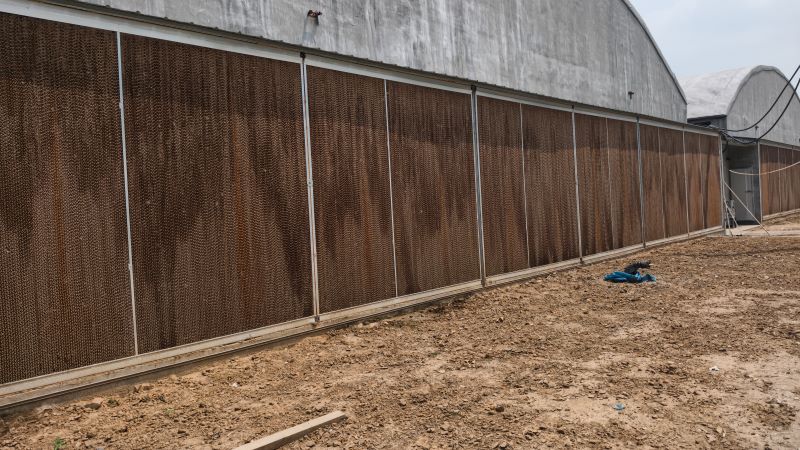
Evaporative Cooling Pad Water Quality and Maintenance: How Hardness, pH, and Mineral Scale Affect Cooling Performance
Water quality is an important factor affecting the performance and maintenance of evaporative cooling pads in poultry houses. High mineral content, unsuitable pH conditions, and accumulated scale can interfere with water distribution and evaporation efficiency. This article examines practical maintenance strategies, including water testing, controlled bleed-off, periodic flushing, and routine inspection. Effective water management can…
-
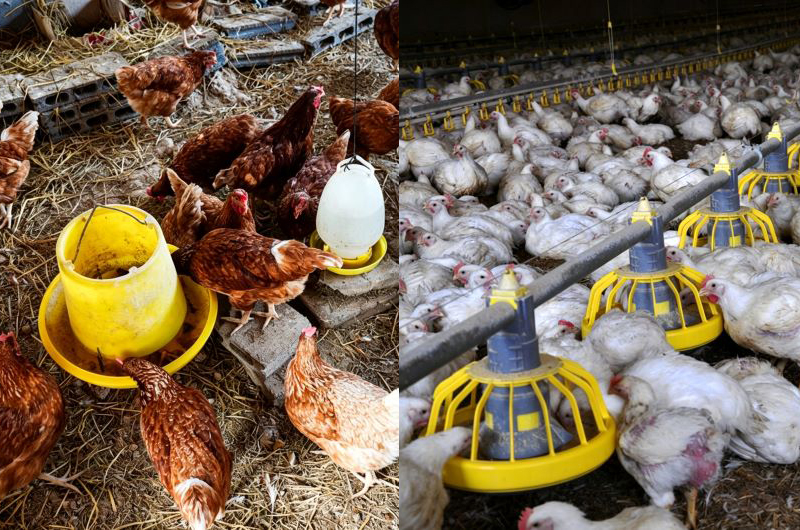
From Feed Waste to Precision Feeding: How Better Feed Management Can Improve Broiler FCR and ROI
Feed is one of the major operating costs in broiler production, making feed efficiency an important factor in farm profitability. Precision feeding and well-designed feeding equipment can help reduce unnecessary feed waste and improve feeding consistency. However, the return on investment depends on farm conditions and should be evaluated using actual production data.
-
From Experience to AI: The Evolution of Environmental Control in Floor-Rearing Houses
Traditional poultry farming relied heavily on grower experience and manual judgment. Today, AI-driven environmental control systems are transforming this approach . Recent research demonstrates significant breakthroughs. Scientists have developed predictive models like EMD-LSTM-Attention that forecast house temperature with a mean absolute percentage error as low as 0.76%, enabling proactive rather than reactive climate management .…
Product Categories
Subscribe To Product News
Leave your email address and receive our latest product updates