Your cart is currently empty!
+86 15863276370

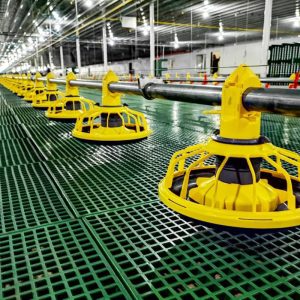
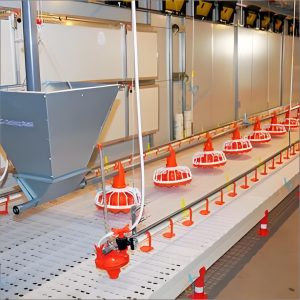
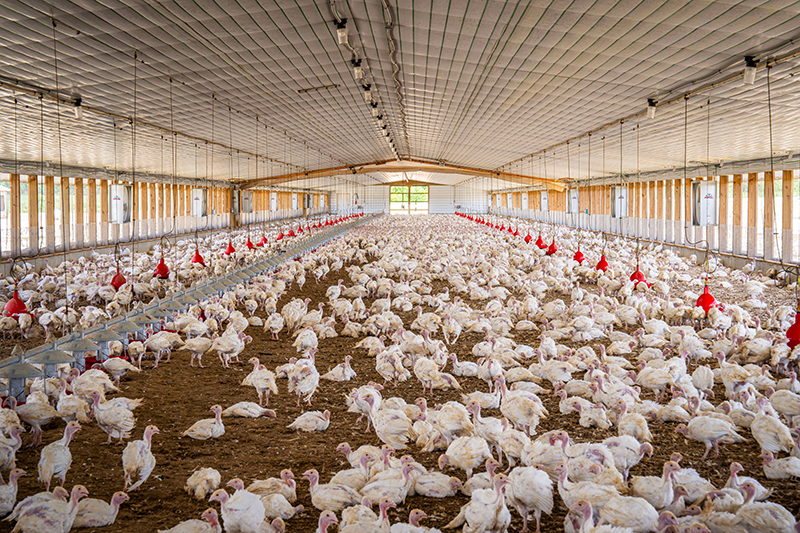
Feed is a major operating expense in poultry production, making feeding efficiency an important consideration for farms of different sizes. Precision feeding systems use equipment such as automatic feeders, feed-level sensors, timers, and control units to support consistent feed delivery and reduce repetitive manual work.
Small farms may benefit from simpler automation that addresses the most time-consuming feeding tasks. Their investment decisions should focus on equipment affordability, maintenance requirements, and whether labor savings justify the initial cost.
Medium-sized farms often need to balance feeding capacity, workforce efficiency, and system reliability. A suitable configuration may help standardize daily operations, but the benefits should be measured against electricity use, maintenance, and any additional installation costs.
Large commercial farms may gain operational advantages from integrated feeding lines and centralized control. However, higher production capacity does not automatically guarantee a better return. System design, feed management, equipment utilization, and staff training remain important.
A practical evaluation begins with measurable farm data:
Annual Net Benefit = Feed Cost Savings + Labor Cost Savings − Additional Operating Costs
The estimated payback period can then be calculated as:
Payback Period = Initial Investment ÷ Annual Net Benefit
These calculations should use actual feed consumption, local feed prices, labor hours, electricity costs, maintenance expenses, and installation costs. Feed savings should be verified rather than assumed, and the analysis should account for seasonal and production-cycle differences.
Ultimately, the most suitable precision feeding system is not necessarily the largest or most automated option. It is the configuration that matches the farm’s production scale, operating conditions, and budget while delivering measurable, sustainable benefits.
Share this:
Other Posts
-
Nipple Drinker vs. Traditional Trough: Which Suits Your Poultry Farm Better?
Watering system choice impacts bird health, water consumption, and labor. Nipple drinkers provide fresh, clean water on demand, reducing spillage and litter moisture. This lowers ammonia emission and footpad dermatitis incidence. Nipples also prevent fecal contamination, improving biosecurity. However, initial cost is higher, and birds need training to use them. Traditional troughs are cheaper and…
-
Synergistic Design of Floor-Level Inlets and Ridge Outlets: An Airflow Optimization Scheme Combining Natural and Mechanical Ventilation
Effective ventilation is critical for poultry house air quality. This scheme integrates floor-level inlets with ridge outlets, blending natural and mechanical forces. Floor-level inlets, placed along side walls near the litter, allow fresh air to enter at bird level. Ridge outlets, installed at the roof peak, enable warm, stale air to rise naturally. During mild…
-
How Sealed Feed Silos Support Poultry Feed Freshness and Farm Cost Control
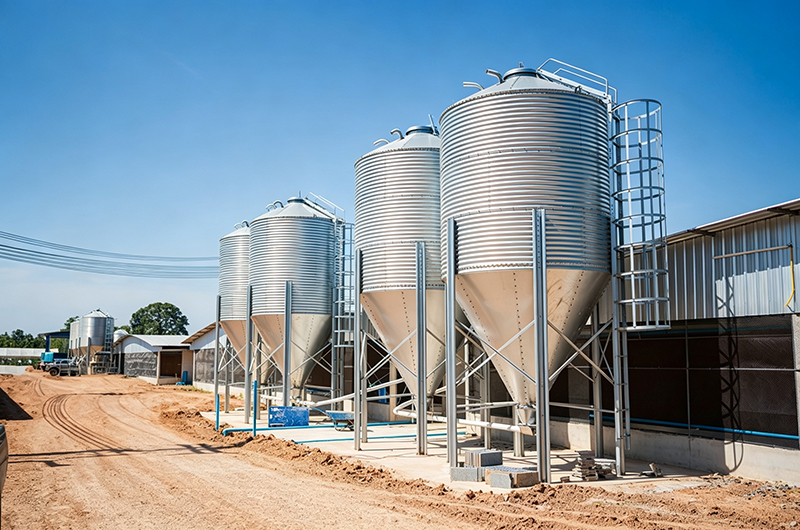
Feed storage is an important part of poultry farm management. Moisture, heat, pests, and prolonged storage can affect feed quality and increase avoidable waste. When a sealed feed silo is combined with an automatic feeding system, farms can improve feed handling, reduce exposure to external conditions, and create a more consistent feeding process.
-
Labor Substitution Effect of Automated Feeding Systems: Empirical Evidence of Labor Savings from Manual Bag Handling to Pneumatic Conveying
This study quantifies labor savings when replacing manual bag feeding with automated pneumatic conveying in a 10,000-bird broiler farm. Manual feeding involves lifting, carrying, tearing, and scattering 25–40 kg bags daily. Two full‑time workers spend 6–8 hours per day on these tasks, equivalent to 2,080–2,600 working hours annually per worker. Automated feeding uses a silo,…
Product Categories
Subscribe To Product News
Leave your email address and receive our latest product updates