Your cart is currently empty!
+86 15863276370

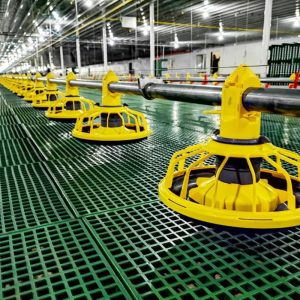
The global broiler farming equipment market is expanding steadily. Valued at $4.18 billion in 2025, it is projected to grow to $6.87 billion by 2035, driven by rising poultry consumption and farm automation.
Key growth factors include labor shortages in developed regions, stricter animal welfare regulations favoring floor rearing systems, and climate‑resilient technologies such as tunnel ventilation and evaporative cooling. Asia‑Pacific and the Middle East are expected to see the fastest adoption, fueled by scaling commercial farms and government food security programs.
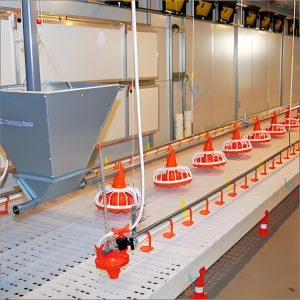
Automated feeding, drinking, and environmental control systems will capture increasing market share as producers seek efficiency and biosecurity. This decade‑long expansion offers significant opportunities for equipment suppliers focusing on smart, cost‑effective solutions.
Share this:
Other Posts
-
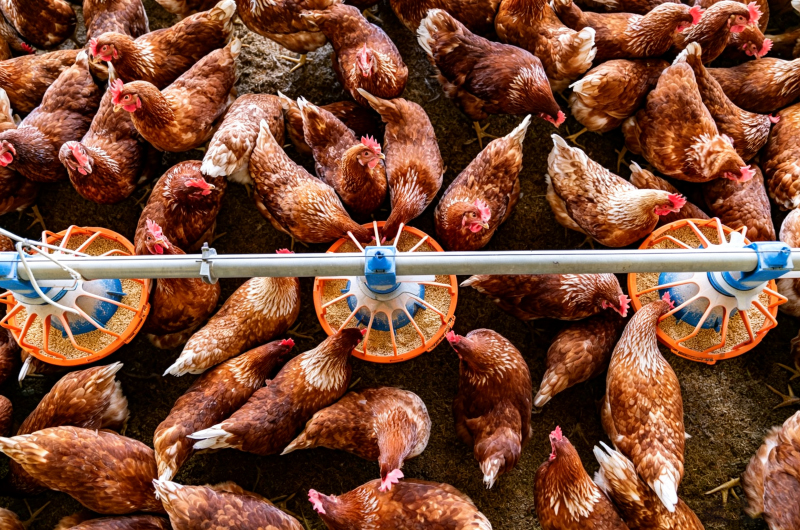
Quantifying Feed Loss in Poultry Farming: Spillage, Spoilage, and Feed Refusal Analysis
Feed loss is a key challenge in poultry production, directly affecting economic efficiency and resource utilization. This article provides a quantitative analysis of three primary sources of feed loss: spillage, spoilage, and feed refusal. By examining their causes, typical loss ratios, and influencing factors, the study highlights practical strategies for reducing waste. Optimizing feeder design,…
-

Integrated Poultry Cooling Systems: Combining Fans, Cooling Pads, Fogging and Smart Climate Control
An integrated poultry cooling system combines ventilation fans, evaporative cooling pads, fogging equipment, sensors, and climate controllers to improve environmental management. System configuration should be adapted to local climate conditions. Dry-hot regions may benefit more from evaporative cooling, while hot-humid environments require careful humidity management and sufficient ventilation. ROI evaluation should include equipment investment, energy…
-
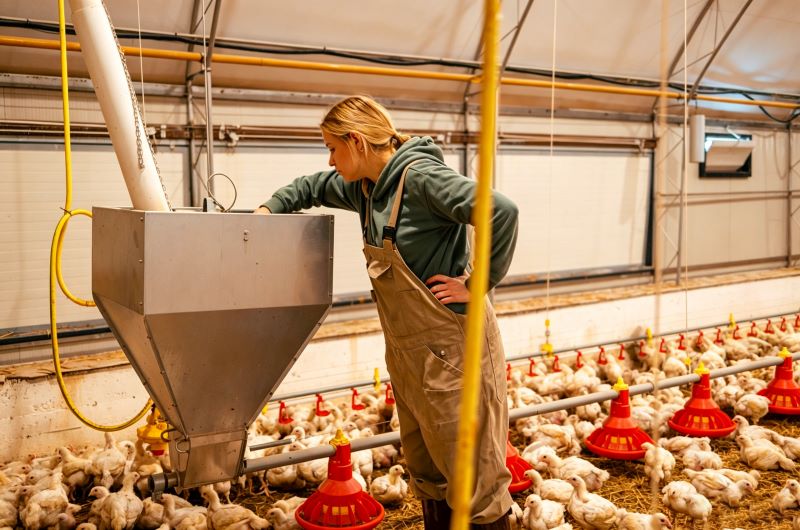
Automatic Poultry Feed Line Blocking Problems: 6 Common Causes and Troubleshooting Solutions
Automatic feeding systems are widely used in modern poultry farms to improve feeding efficiency and reduce labor dependency. However, feed line blockage can interrupt feeding operations and affect farm productivity. This article analyzes six common causes of automatic poultry feed line blockage, including feed quality issues, material accumulation, mechanical component wear, improper installation, electrical problems,…
-
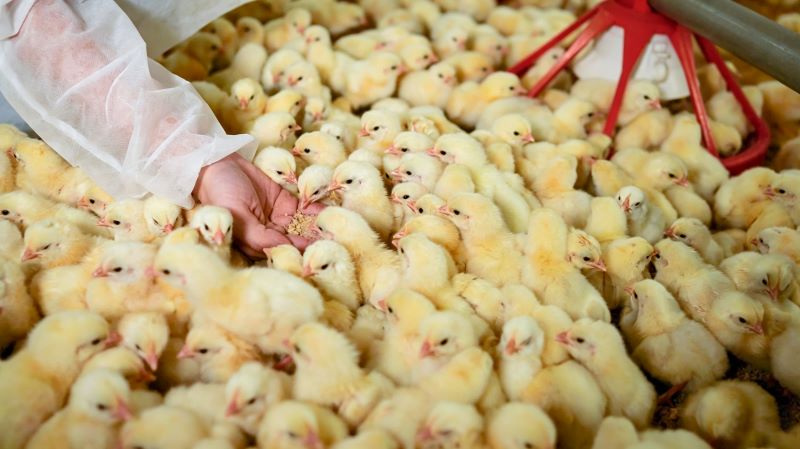
ROI Analysis of Precision Feeding Systems in Poultry Farming: How Smart Feeding Improves Feed Efficiency and Operational Performance
Precision feeding systems are becoming increasingly important in modern poultry production as farms seek better feed efficiency and more standardized management. This article analyzes the investment value of precision feeding technology by examining its impact on feeding accuracy, feed utilization, labor requirements, and operational efficiency. The ROI of such systems depends on factors including farm…
Product Categories
Subscribe To Product News
Leave your email address and receive our latest product updates