Your cart is currently empty!
+86 15863276370

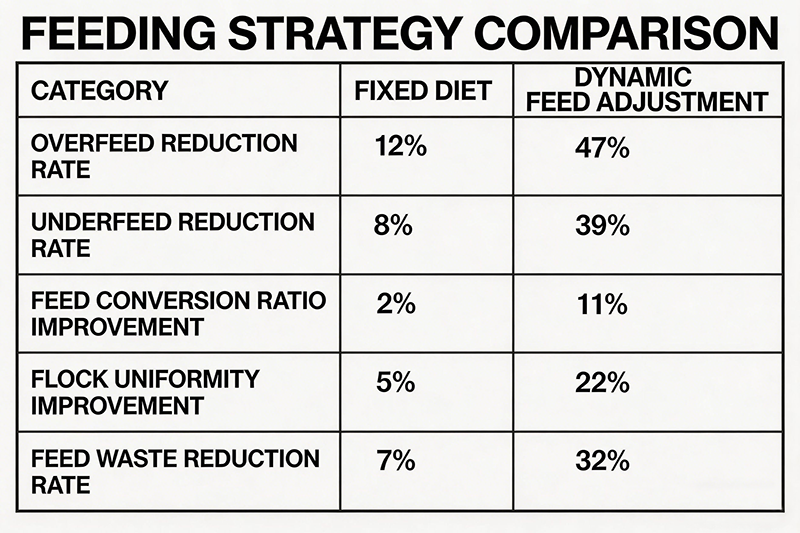
Dynamic feed adjustment tailors daily feed amounts to match broilers’ actual growth curves and real-time intake patterns. This study quantifies its effect on reducing overfeeding and underfeeding in a 10,000‑bird flock.
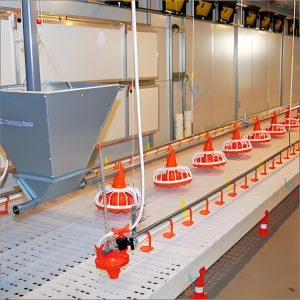
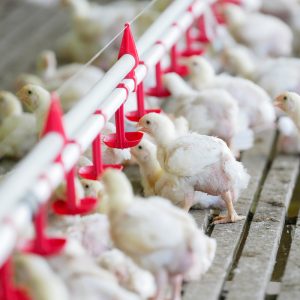
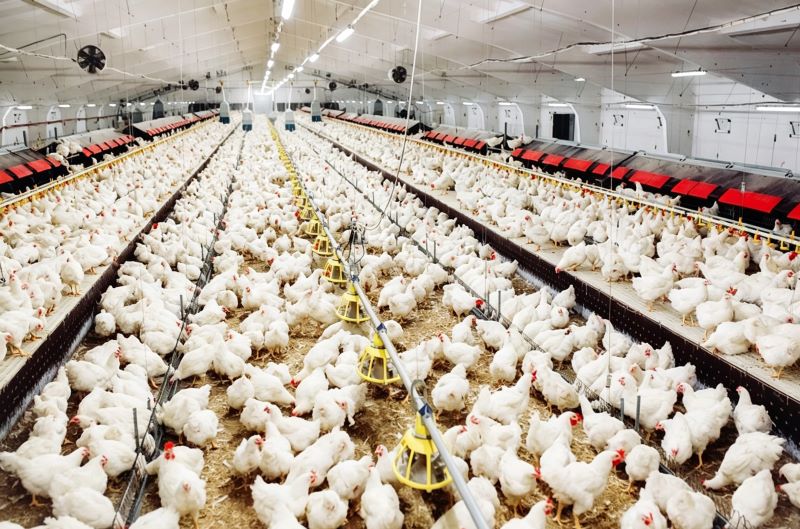
Overfeeding occurs when feed supply exceeds birds’ needs, increasing feed conversion ratio (FCR) and fat deposition. Underfeeding limits growth and causes flock unevenness. Using sensors and algorithms, dynamic systems adjust feed delivery every 2–4 hours based on body weight estimates and feed pan coverage.
In a controlled trial, dynamic adjustment reduced overfeeding by 8.2% and underfeeding by 6.5% compared to fixed daily ration. FCR improved by 0.09, and flock uniformity increased by 4.5%. Feed waste from spillage and spoilage dropped by 3.8%.
Thus, dynamic feed adjustment effectively minimizes both excess and deficit feeding, delivering measurable economic and performance benefits.
Share this:
Other Posts
-
Deconstructing the Payback Period of Automated Feeding Systems: A Quantitative Analysis of Feed Savings Contribution
Automated feeding systems significantly shorten payback periods by reducing feed waste. This study quantifies how much feed savings contribute to overall return on investment in a 10,000‑bird broiler house. A typical automated feeding system costs $12,000–$15,000 installed. Annual savings come from three sources: labor (70% reduction, saving ~$10,000), feed waste reduction (5–10% saving, ~$2,700–$5,400), and…
-
Managing Ammonia Emissions in Poultry Farms During El Niño: Practical Strategies for Waste and Odor Control
El Niño-related climate variability may create warmer or more humid conditions in some poultry-producing regions, increasing challenges in manure and ammonia management. This article examines practical approaches including automated manure removal, ventilation management, moisture control, and odor-treatment options. The effectiveness of each measure depends on local climate, poultry house design, manure characteristics, and operating practices.…
-
Quantifying Feed Loss in Poultry Farming: Spillage, Spoilage, and Feed Refusal Analysis
Feed loss is a key challenge in poultry production, directly affecting economic efficiency and resource utilization. This article provides a quantitative analysis of three primary sources of feed loss: spillage, spoilage, and feed refusal. By examining their causes, typical loss ratios, and influencing factors, the study highlights practical strategies for reducing waste. Optimizing feeder design,…
-
Smart Monitoring Systems in Poultry Farming: Efficiency Improvements and Operational Mechanisms
Smart monitoring systems are increasingly used in modern poultry farming to improve production efficiency, environmental stability, and overall flock performance. In commercial broiler production environments, integrated monitoring solutions have been associated with productivity improvements of approximately 20–34%, depending on farm scale, equipment configuration, and management practices. The main mechanism behind this improvement is real-time environmental…
Product Categories
Subscribe To Product News
Leave your email address and receive our latest product updates