Your cart is currently empty!
+86 15863276370

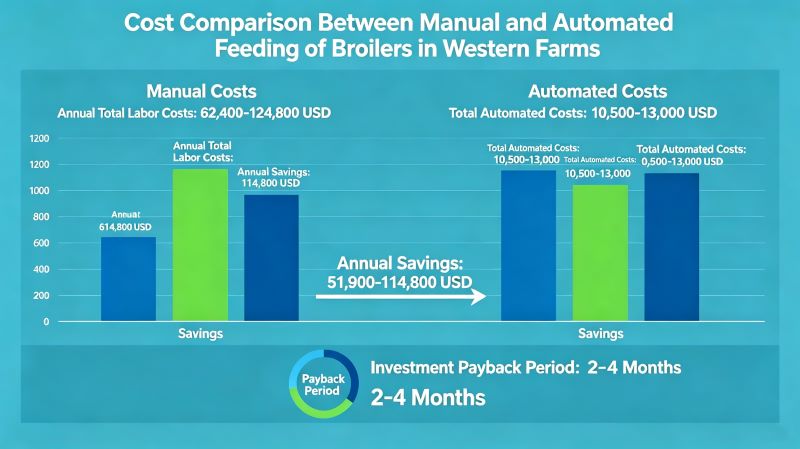
In the US and EU, hourly wages for farm labor range from 15to20. Manual feeding of a 10,000-bird house requires two to three full‑time workers. Annual labor cost per worker (2,080 hours) is 31,200–41,600. Thus, total manual feeding labor costs 62,400–124,800 per year.
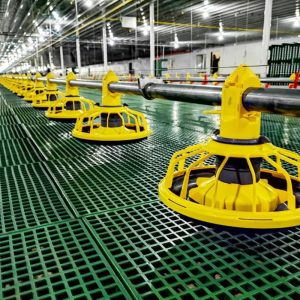
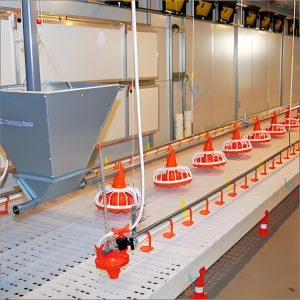
Automated feeding systems (silo, auger, pan feeders) reduce this to one part‑time worker (approx. 500 hours/year) costing 7,500–10,000, plus maintenance and electricity (3,000).Totalautomatedcost:10,500–$13,000.
Annual saving = 51,900–114,800, effectively replacing 2–3 workers. For a $15,000 automated system, payback period is 2–4 months. Automation delivers clear labor cost reduction in high‑wage markets.
Share this:
Other Posts
-
Nipple Drinker vs. Traditional Trough: Which Suits Your Poultry Farm Better?
Watering system choice impacts bird health, water consumption, and labor. Nipple drinkers provide fresh, clean water on demand, reducing spillage and litter moisture. This lowers ammonia emission and footpad dermatitis incidence. Nipples also prevent fecal contamination, improving biosecurity. However, initial cost is higher, and birds need training to use them. Traditional troughs are cheaper and…
-
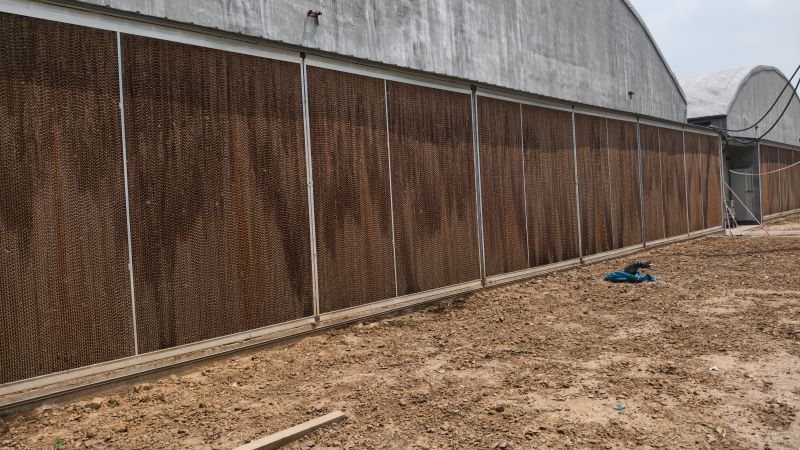
How Do Poultry House Cooling Pads and Exhaust Fans Work? Understanding Evaporative Cooling in Summer
Keeping poultry houses within a suitable temperature range during summer is an important part of environmental management. A combination of evaporative cooling pads and exhaust fans is widely used because the two systems work together to move and cool incoming air. The process begins with the exhaust fans. By removing hot air from the house,…
-
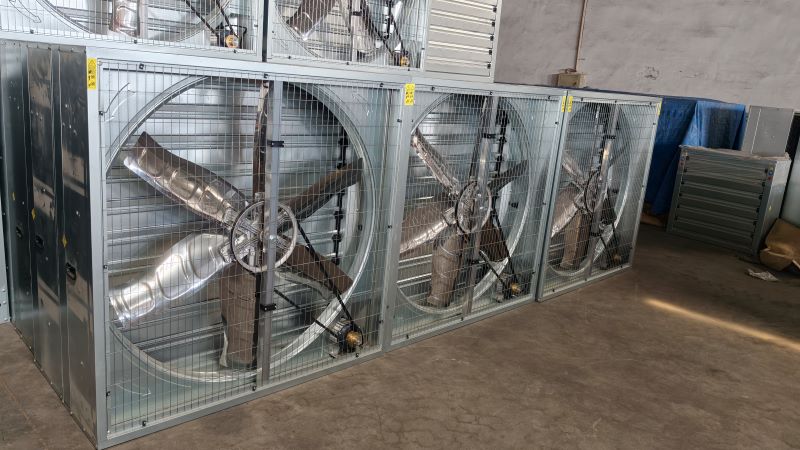
How Variable-Speed Poultry Fans Reduce Energy Use Without Compromising Cooling Performance
Variable-speed poultry fans can help farms balance cooling performance and electricity consumption by adjusting airflow according to environmental conditions. Instead of operating continuously at full speed, fans can run at lower speeds during moderate conditions and increase capacity when temperatures rise. When integrated with temperature sensors, evaporative cooling pads, and climate-control systems, variable-speed ventilation can…
-
Professional Broiler Breeding Equipment, Boosting Efficient Farming
As a professional manufacturer of broiler breeding equipment, we are committed to providing advanced layer-stacked broiler cage systems for farmers. Our products are made of high-quality hot-dip galvanized steel with a service life of over 15 years, featuring corrosion resistance and anti-aging properties to ensure long-term stable operation. Core Advantages: Our equipment adopts a frame…
Product Categories
Subscribe To Product News
Leave your email address and receive our latest product updates