Your cart is currently empty!
+86 15863276370

A new trial shows that a dynamic feed optimization model based on age‑weight curves significantly improves broiler production.
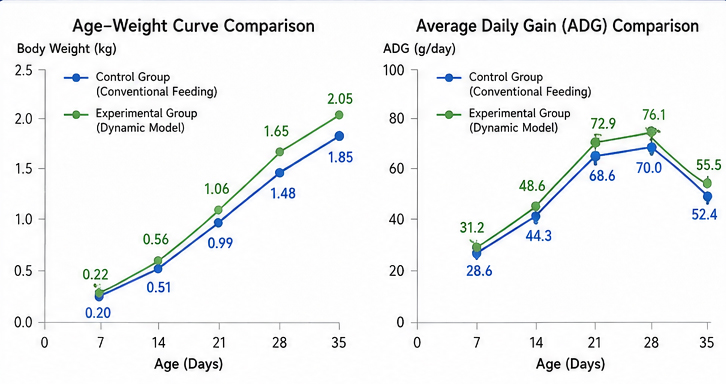
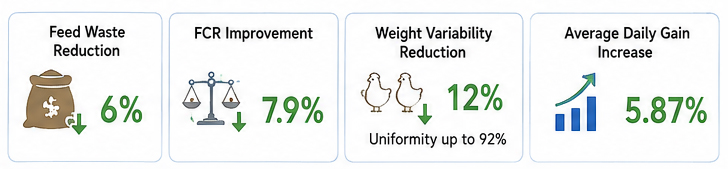
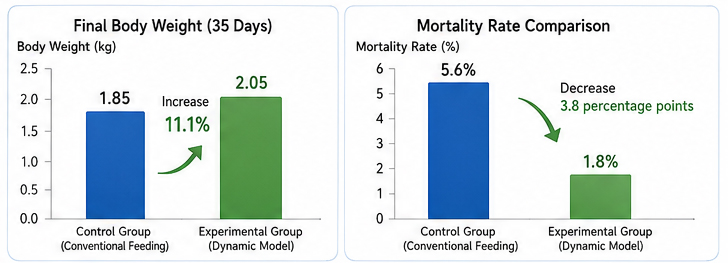
In a 35‑day test with 10,000 Ross 308 broilers, the model reduced feed waste from 8.2% to 2.2% (a 6% absolute cut), lowered feed conversion ratio (FCR) by 7.9%, and increased final body weight from 1.85 kg to 2.05 kg (+11.1%). Flock uniformity improved 12%, and mortality dropped by 3.8 percentage points.
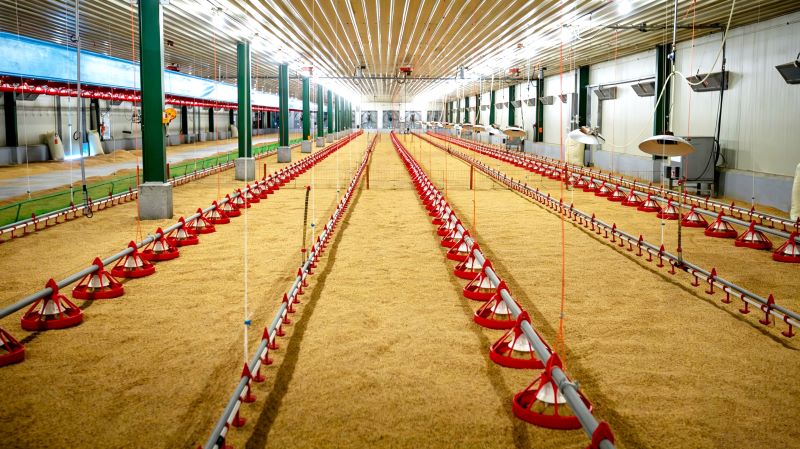
Unlike fixed feeding, the model adjusts feed portions every 2–4 hours using weekly weight samples, real‑time algorithms, and high‑precision sensors (±1g). The system is ready for integration with automated feeders in commercial floor rearing farms.
This data‑driven approach reduces feed costs (60–70% of total production cost) and enhances flock health. It represents a practical step toward precision poultry farming.
Share this:
Other Posts
-
Automatic Poultry Feed Line Blocking Problems: 6 Common Causes and Troubleshooting Solutions
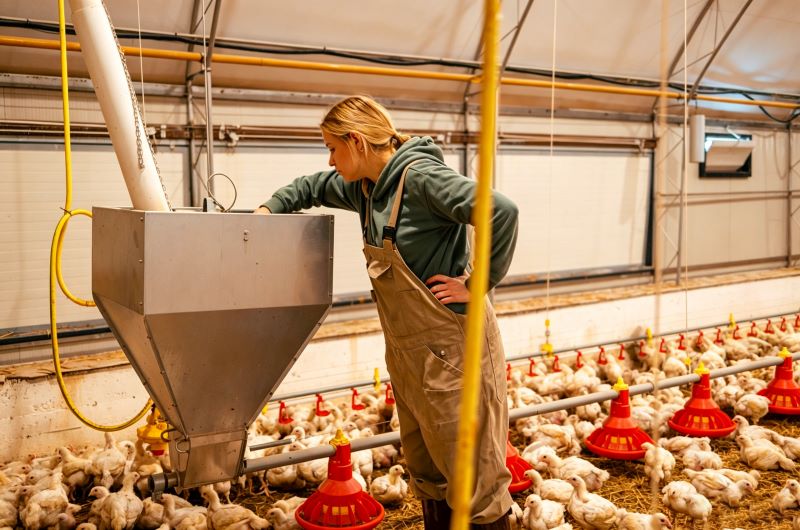
Automatic feeding systems are widely used in modern poultry farms to improve feeding efficiency and reduce labor dependency. However, feed line blockage can interrupt feeding operations and affect farm productivity. This article analyzes six common causes of automatic poultry feed line blockage, including feed quality issues, material accumulation, mechanical component wear, improper installation, electrical problems,…
-
Equipment Depreciation and Technology Iteration: A Lifecycle Cost Analysis Model for Automated Floor Rearing Systems
Automated floor rearing systems require a lifecycle cost perspective beyond initial purchase price. Depreciation—spreading equipment cost over its usable life—and technology iteration—rapid upgrades in sensors, controls, and software—shape total ownership expense. A robust analysis model includes five phases: acquisition, installation, operation, maintenance, and residual value. Shorter technology cycles (e.g., every 3–5 years) accelerate depreciation but…
-
Poultry House Orientation and Heat Stress Reduction: East–West vs North–South Layout Impact on Solar Heat Gain
Poultry house orientation is a fundamental design parameter that directly affects thermal comfort, ventilation efficiency, and broiler performance. In commercial poultry production systems, improper building orientation can significantly increase solar heat gain and raise the risk of heat stress, especially in hot climate regions. An east–west oriented poultry house is typically more exposed to direct…
-
Indonesia, Vietnam, the Philippines: Opportunities and Entry Strategies for Floor Rearing Equipment in Southeast Asia’s Three Key Markets
Southeast Asia’s poultry sector is shifting from backyard farming to commercial production, creating strong demand for floor rearing equipment. Indonesia, Vietnam, and the Philippines represent the region’s most promising markets. Indonesia has the largest broiler population but faces fragmentation. Success requires affordable semi‑automated systems and local after‑sales support. Vietnam’s market is more structured, with growing…
Product Categories
Subscribe To Product News
Leave your email address and receive our latest product updates